
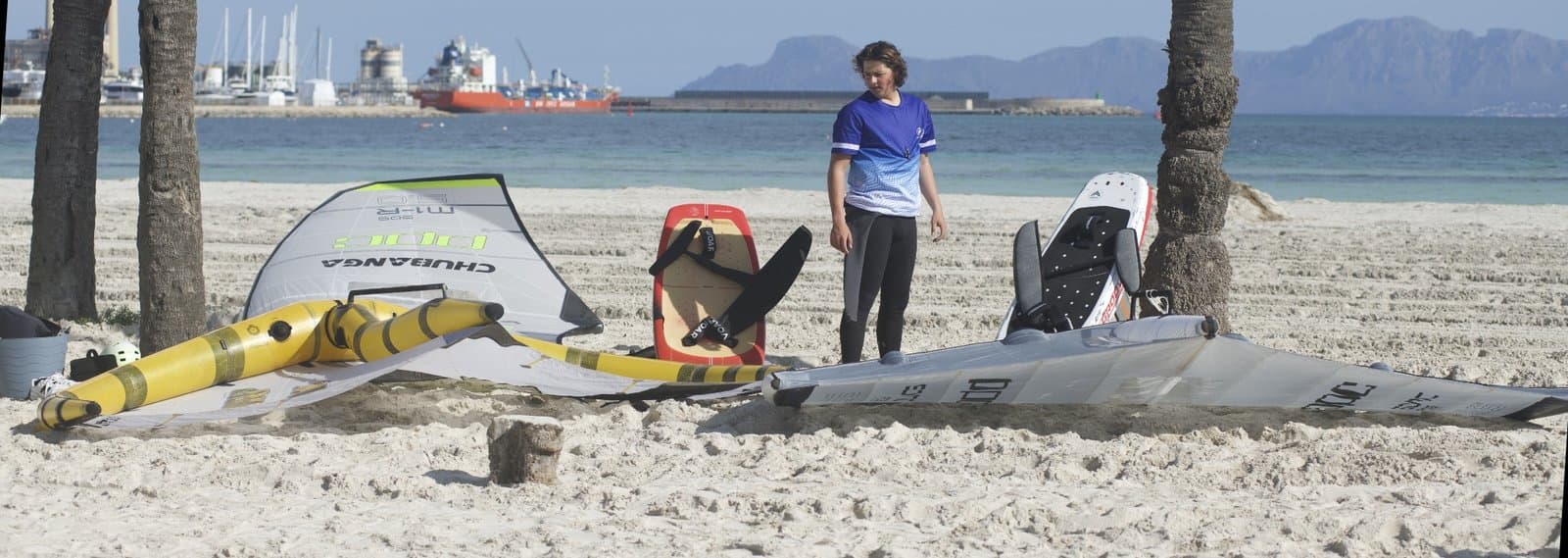
First day wingfoil: what to expect, best wind for beginners, and your first gear choices
Written by: AquaGear PRO Team — wingfoil community project in beta, focused on safer, more informed session decisions.
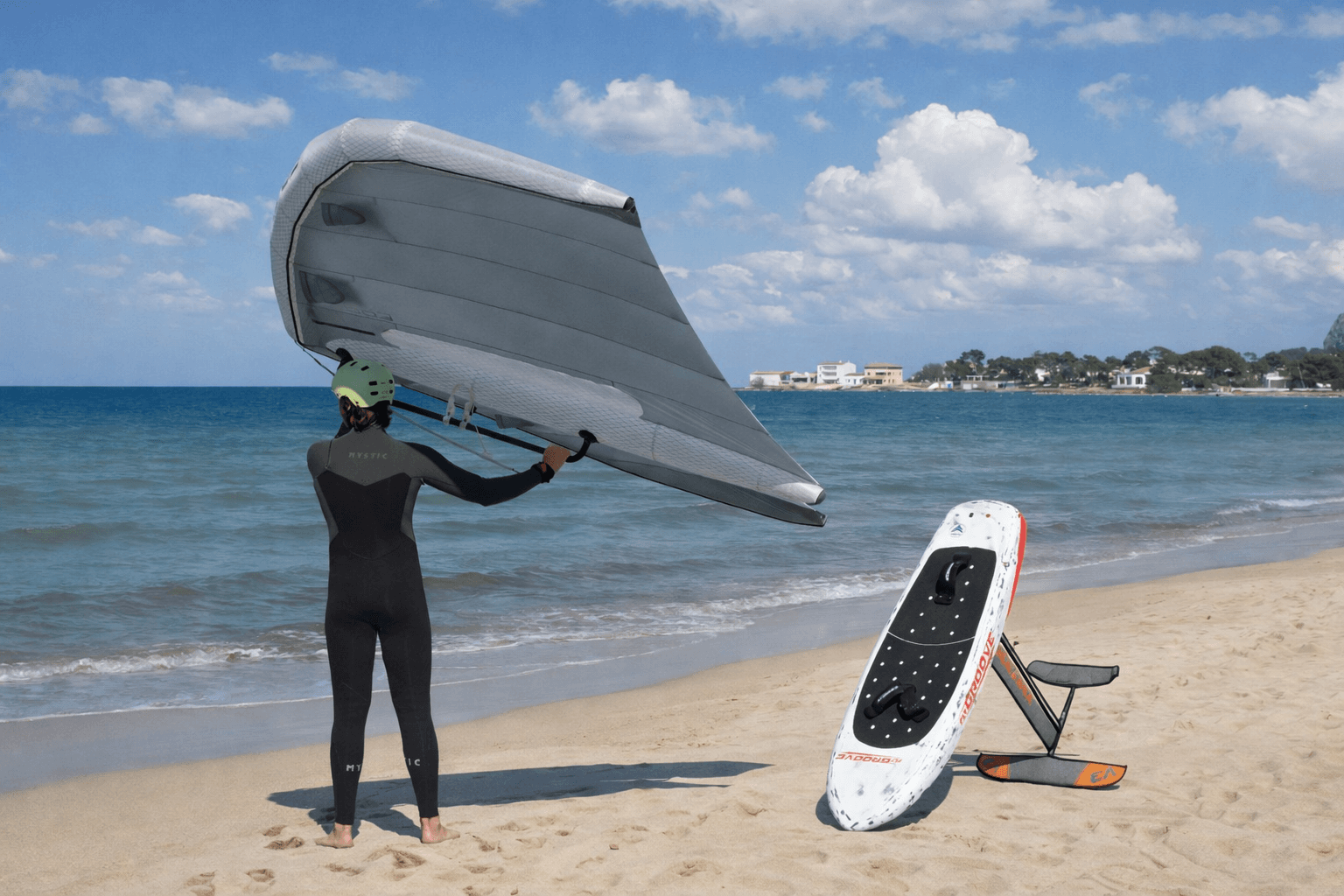
Your first day Wingfoil is a perfect mix of adrenaline and confusion. Even if you come from kitesurfing, windsurfing, or sailing, wingfoiling feels different: the wing is light but “alive”, the foil changes balance rules, and your brain wants to jump straight to flying.
The good news: if you set your expectations, wind choice, and early gear logic correctly, you’ll progress faster and enjoy the learning curve much more.
This post answers the 4 questions most beginners Google right after their first lesson:
- What to expect on your first day wingfoil / first session
- What’s the best wind for beginners
- How to think about board volume wingfoil
- How to understand wing size for 20 knots (without getting lost in numbers)
Key takeaways
- Day 1 isn’t about “flying”—it’s about control + direction + getting back safely.
- The real best wind for beginners is stable wind, not necessarily strong wind.
- Your most important early choice is a forgiving board (board volume wingfoil) because it reduces fatigue and frustration.
- Wing size for 20 knots depends on rider weight, skill level, and wind stability—choose what keeps you in control, not what sounds “small and advanced”.
1) First day wingfoil: what really changes (even if you already ride)
Wingfoiling can make you feel like a beginner again for three main reasons:
- A wing doesn’t “pull” like a kite: you create power through body position, angle, and timing.
- A foil amplifies small mistakes: tiny movements make a big difference.
- Fatigue arrives quickly: once you’re tired, your technique collapses and decisions get worse.
A successful Day 1 is simple: finish with energy and learn one thing well (just one).
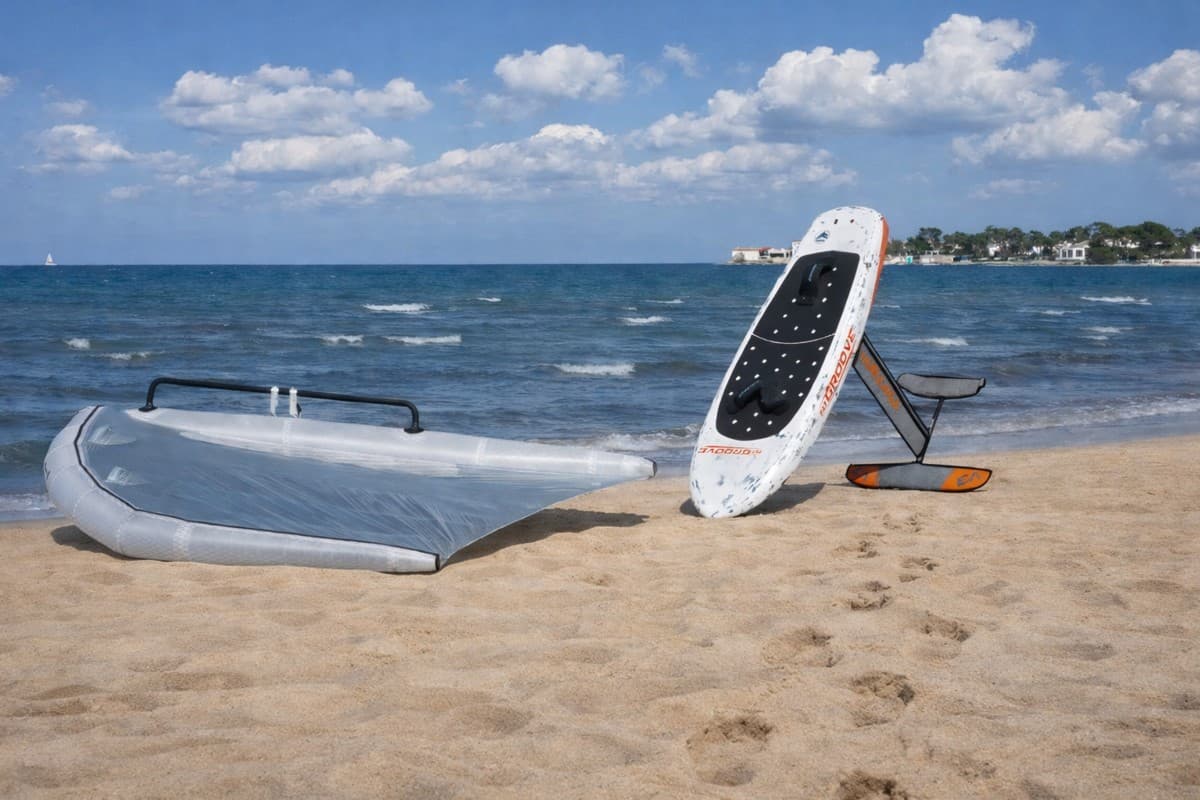
A simple routine that works (10–20–5–20)
- 10 min on land: setup + wing handling
- 20 min on water: short runs, focus on control
- 5 min break: reset
- 20 min second round: improve one single thing
2) Best wind for beginners: the wind that actually helps you learn
The most common question is: “How many knots do I need?”
The most useful answer is: you need manageable, stable wind more than you need strong wind.
What defines the best wind for beginners
- Safe direction: side or side-on is usually easier (less drift risk)
- Stability: fewer gusts and fewer lulls
- Water state: flat water or light chop
- Space: wide area, easy exit points, low congestion
If the wind is “elastic” (gust–lull–gust), you learn slower and get tired faster.
A simple way to think about it
Don’t chase a magic number. Choose conditions where:
- you can start without being overpowered
- you can return to shore without fighting the session
3) Board volume wingfoil: the choice that changes everything (for real)
After the first lesson, many people want to buy “small” to feel advanced.
That’s usually the #1 beginner mistake.
Why board volume matters so much early on
A board with enough volume helps you:
- start more easily
- stay stable when you stop
- reposition without constant struggle
- get more “useful attempts” with less fatigue
A board that’s too small makes the session feel like survival:
- fewer successful reps
- faster exhaustion
- more frustration, slower progression
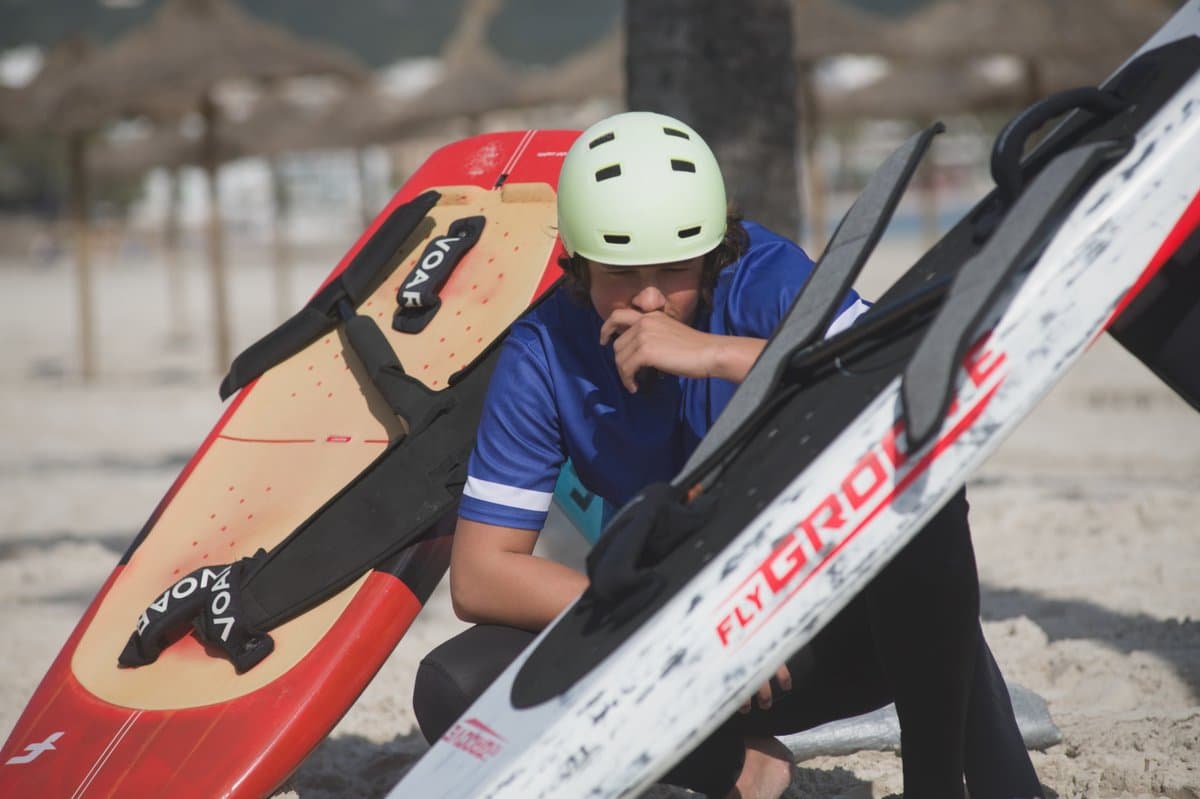
A simple volume mindset (without rigid numbers)
- More volume = more stability = faster learning in early sessions
- Less volume = more performance later, but harder learning today
If your goal is progression, “easy and stable” beats “cool and small.”
4) Wing size for 20 knots: how to understand it without overthinking
When you search wing size for 20 knots, it sounds like there’s one correct answer. In reality it depends on:
- rider weight
- skill level (first sessions vs intermediate)
- wind stability (gusty vs steady)
- foil/board efficiency
A practical rule that helps
For beginners, the “right” wing size is the one that:
- gives enough power to work cleanly
- still keeps you in control when gusts hit
A wing that’s too small often leads to:
- excessive pumping
- poor technique under fatigue
- frustration and slow learning
A wing that’s too big often leads to:
- being overpowered
- losing control and confidence
- higher safety risk
So… what about “20 knots”?
For many beginners, 20 knots is already a wind speed where:
- control and safety should be the priority
- sizing should be conservative, not “as small as possible”
The best way to decide is: weight + level + stability.
If in doubt, choose the setup that keeps you relaxed and able to return with margin.
A simple decision path (that prevents expensive mistakes)
If you’re just starting, prioritize in this order:
- Best wind for beginners (stable + safe direction)
- Board volume wingfoil (stability and forgiveness)
- Wing size aligned with wind (this is how to read “wing size for 20 knots”)
- Then optimize foil and performance
Suggested chapters:
- 00:00 First day wingfoil: what to expect
- 02:30 Best wind for beginners
- 05:00 Board volume wingfoil
- 07:30 Wing size for 20 knots (how to think about it)
Closing thoughts
If you remember one thing: in wingfoiling, your first big upgrade is better decisions, not “smaller gear”.
Learn in stable wind, choose an easy spot, ride a forgiving board, and pick a wing size that keeps you in control. You’ll progress faster, feel safer, and enjoy every session more
AquaGear PRO is built to support exactly this phase: helping riders make more informed, safer decisions about conditions, spots, and setup.
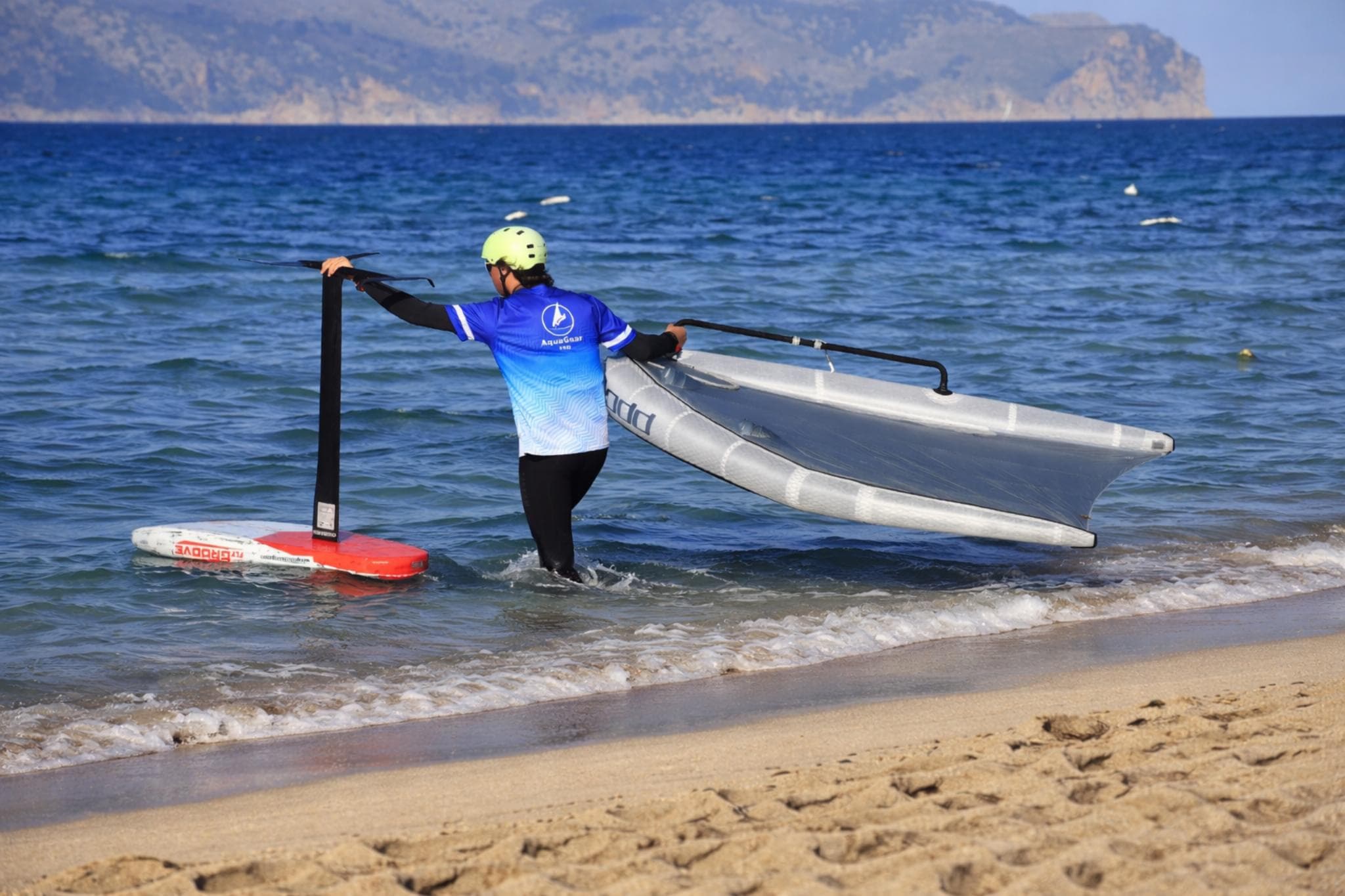
Safety note: This guide supports decision-making but does not replace professional instruction or local rules. Always check real conditions (wind, currents, traffic) and choose conservative options. If in doubt, don’t launch.